
The reference against the world
The table above shows the Central Bank’s gold price in rupees per troy ounce beside an independent world price in rupees. The two should sit within a point or two of each other because they measure the same metal at nearly the same moment. The text below explains why they can differ, where the world figure comes from, and why a gap between either of them and a shop quote is the making charge and margin, not a mistake.
The reference against the world metal
One pawn and other weights, at the central bank's price and at the world price read now.
| Weight, 24K | Central bank reference | World metal now | Reference against world |
|---|---|---|---|
| 1 gram | Rs 42,205 | Rs 42,135 | Rs +70 |
| 1 pawn | Rs 337,643 | Rs 337,081 | Rs +562 |
| 10 grams | Rs 422,053 | Rs 421,351 | Rs +702 |
| 1 troy ounce | Rs 1,312,732 | Rs 1,310,548 | Rs +2,184 |
Price of: 03.11.2026
What the columns show
The reference column is the Central Bank’s published price for one troy ounce of fine gold in rupees. The world column is an independent calculation: the world gold price in US dollars per troy ounce, read from one source, multiplied by the dollar to rupee exchange rate read from another source. Neither figure is taken from the Central Bank’s page. The comparison shows whether the bank’s reference is in line with the international market.
The world figure is read later in the day than the bank’s reference, which is struck at the start of the business day. That timing difference is the main reason the two can differ. The world figure is also not a published official price; it is a calculation from two market data points. This site uses it as a cross-check, not as a replacement for the bank’s reference.
Why the two should sit close
The Central Bank derives its reference from the world gold price in US dollars and its own indicative dollar to rupee rate. The independent world figure is the same two inputs, but from different sources and read at a later time. Because both measure the price of one troy ounce of fine gold in rupees, they should be nearly equal. A large gap would suggest an error in one of the inputs or a stale price.
This site refuses to show a new reference if it sits more than five per cent from the independently computed world price. That check catches a misprinted number or a frozen source. The closeness of the two figures is a sign that the reference is a fair representation of the international market at the start of the business day.
Why they can differ
The reference is struck at the start of the business day, using the world price at that moment. The world figure in the table is read later, after the world market has moved. If the gold price in US dollars changes during the day, the world figure will move, but the reference will not. The difference is a timing gap, not an error.
The rupee can also move. The reference uses the bank’s indicative rate, which is set in the morning. The world figure uses a market rate read later. If the rupee moves during the day, the two rupee prices will differ. Again, that is a timing difference. Neither figure is wrong; they are snapshots from different moments.
The gap to a shop quote
A shop quote will sit above both the reference and the world figure. The difference is the making charge for the jewellery and the shop’s margin. Those costs are real and local; they are not a mistake in the metal price. A reader who compares a shop quote with the table should expect the shop to be higher by an amount that varies from shop to shop.
A pawnbroker’s buy-back price will sit below both the reference and the world figure. The pawnbroker deducts a wastage allowance and a buy-back deduction from the metal value. Those deductions are also real and local. The table shows the full metal value; the pawnbroker pays less because the piece is not new and the pawnbroker must make a margin.
Where the world figure comes from
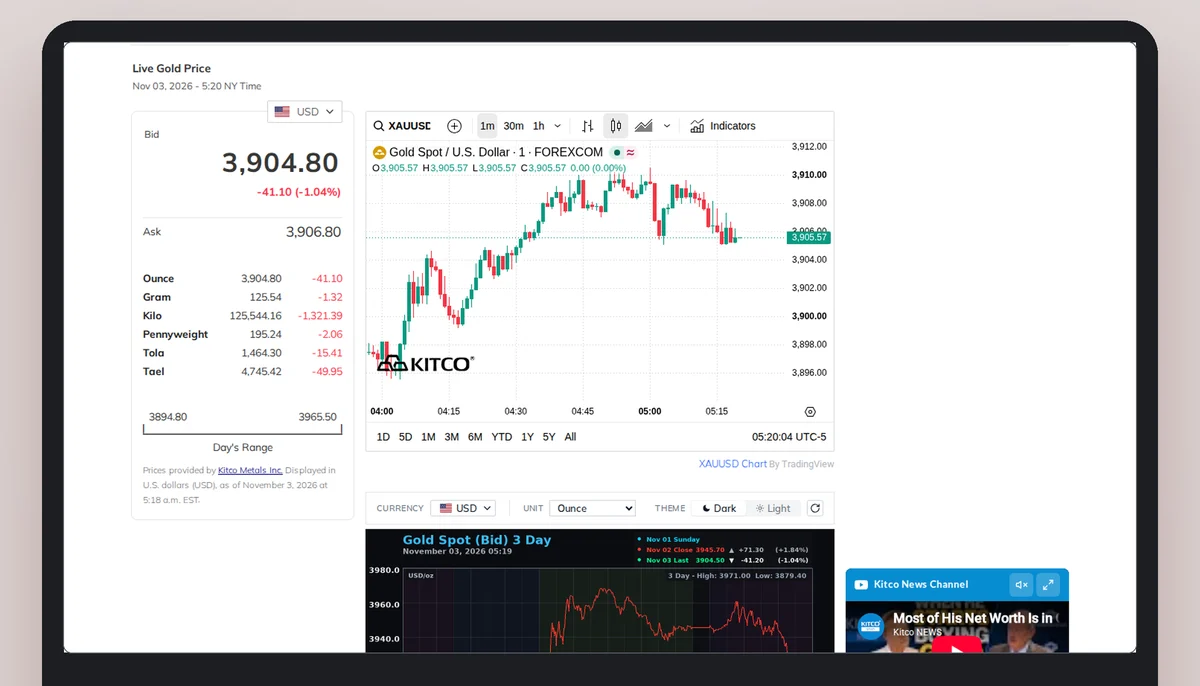
The world gold price is read in US dollars per troy ounce from one source. That source is a market data provider, not the Central Bank. The dollar to rupee rate is read from a second source, also not the Central Bank. The two are multiplied to produce the world price in rupees. This site does not use the bank’s own inputs for the world figure, because that would make the comparison circular.
The world figure is not a tradable price. It is a calculation for comparison. A reader cannot buy gold at the world figure any more than at the reference. Both are benchmarks, and the actual transaction price will include costs that are not in the benchmarks.
What the comparison tells a reader
The comparison tells a reader whether the Central Bank’s reference is in line with the international market. If the two are close, the reference is a fair start-of-day price. If they are far apart, something has moved or one of the sources is stale. The table makes that check visible without the reader having to do the arithmetic.
It also tells a reader that the shop price is not a benchmark. A shop quote that is far above the reference is not necessarily overcharging; it may be a high making charge for intricate work. The table separates the metal value from the jewellery value, and that separation is the useful part.
Quick facts
Keep reading
Questions about today's price
Why doesn’t the world figure match the bank’s?
The bank’s reference is struck at the start of the business day, while the world figure is read later. If the gold price or the rupee moves during the day, the two will differ. The difference is a timing gap.
Is the world figure an official price?
No. The world figure is calculated by this site from two market data sources: a US dollar gold price and a dollar to rupee rate. It is not published by any official body.
Can I buy gold at the world figure?
No. The world figure is a benchmark calculation. A real purchase will include a making charge and a margin, and a real sale will include deductions.
Why is the shop price so much higher?
The shop price includes the making charge for the jewellery and the shop’s margin. Those costs are not in the metal price. The difference varies by shop and by piece.
What if the two figures are far apart?
A large gap suggests a stale price or a fast-moving market. This site refuses to show a new reference if it is more than five per cent from the world figure, so the table will not display a clearly wrong number.
A contract on gold, different from a pawn
If you want exposure to the gold price without weighing or storing metal, a contract for difference with an international broker settles in your account’s currency and delivers nothing physical. It is a different risk from buying a pawn.